Hello everyone, I’m Programmer Yupi.
Recently, a friend told me that during an interview, the interviewer asked him, “How much do you know about AI programming?”
He confidently replied, “Isn’t it just Vibe Coding? Just chatting with AI, what’s so difficult about it?”
The interviewer couldn’t help but laugh and asked, “Is that it? Are you sure?”
He was stunned: “Uh…”
If it were 2025, that answer might impress many interviewers, as back then, AI programming was synonymous with Vibe Coding. Just chat with AI, and the code appears, as long as it runs, that’s enough.
But it’s 2026 now, and AI programming has evolved far beyond that!
AI Programming != Vibe Coding
Vibe Coding is just one of many modes of AI programming, and it is the most casual one. Today, there are numerous AI programming modes, ranging from intuitive approaches to structured methodologies, from individual interactions with AI to comprehensive frameworks. Different scenarios call for different best practices.
Today, I will clarify the six mainstream AI programming paradigms, their differences, and the scenarios they are best suited for. Understanding these will prepare you for any AI programming questions in your next interview.
1. Vibe Coding
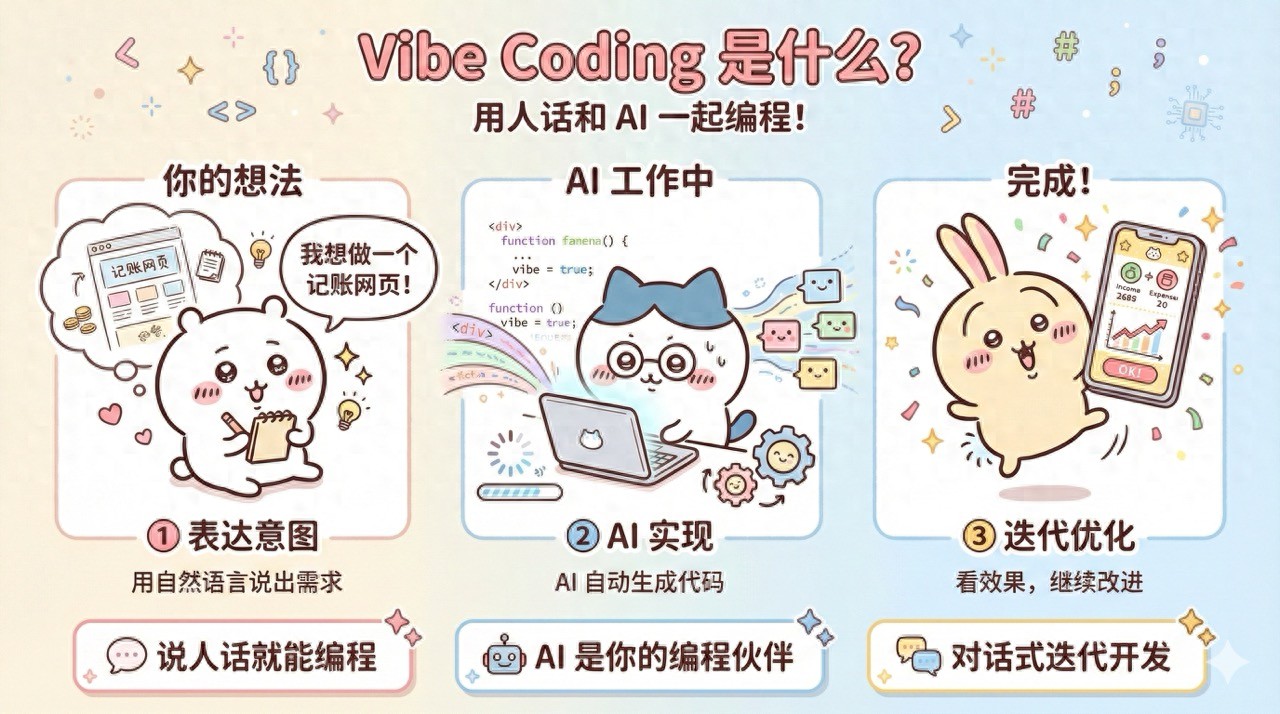
Vibe Coding is a concept proposed by computer scientist Andrej Karpathy in February 2025. It describes a new programming approach: conversing with AI in natural language to help write code. You only need to describe your requirements, test results, and guidance.
You don’t need to master programming syntax; you just need to express your ideas clearly, and AI will turn those ideas into runnable code.
Thus, the focus of Vibe Coding is not on writing code but on clarifying requirements and expressing them clearly. The clearer your description, the more reliable the AI’s output.
It’s like ordering takeout; you tell the delivery platform what you want, and the restaurant prepares it for you. You don’t need to know how to cook, but you should know what you want to eat.
Suitable Scenarios: Creating small tools, quickly validating ideas, personal project prototypes, or for non-programmers wanting to quickly build products.
2. Agentic Engineering
Agentic Engineering is a new concept introduced by Andrej Karpathy in February 2026, which can be understood as a standardized version of Vibe Coding.
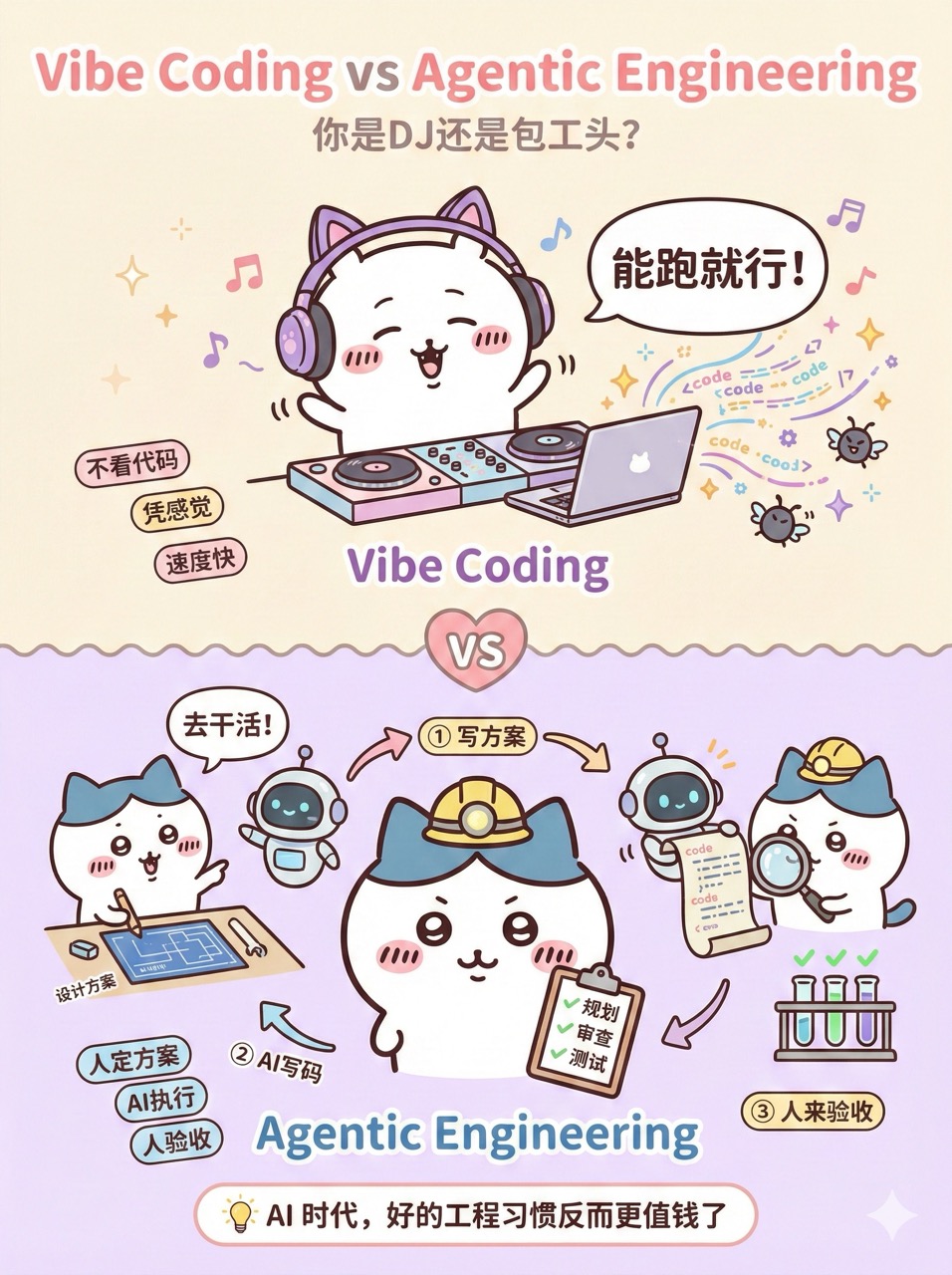
Vibe Coding is about writing code based on intuition: you give AI a prompt, and it spits out code that runs, and if it doesn’t, you just send the error back for AI to fix. It’s quick for small tools, but larger projects can easily fail.
Agentic Engineering emphasizes: first, clarify what you want to do, write a plan, break down tasks, and then let AI execute them. Afterward, you must verify the results; if the quality is lacking, send it back for rework.
In analogy, during Vibe Coding, you are a DJ, playing songs based on feeling; in Agentic Engineering, you are a contractor, where processes, quality, and acceptance are all under your control. One follows intuition, the other follows a process.
Of course, Vibe Coding is not outdated. Vibe Coding helps you see possibilities, while Agentic Engineering turns those possibilities into usable products. They are suitable for different scenarios: use Vibe Coding for small tools and Agentic Engineering for enterprise-level projects.
Suitable Scenarios: Medium to large projects, team collaboration, formal products requiring long-term maintenance.
3. Harness Engineering
Harness Engineering is a new paradigm in AI engineering that emerged in 2026, centered around the idea of humans steering + AI executing.
It does not optimize the AI model itself but builds an entire set of constraints, feedback loops, and workflow management systems around the AI agent to ensure it runs reliably and quickly in unpredictable environments.
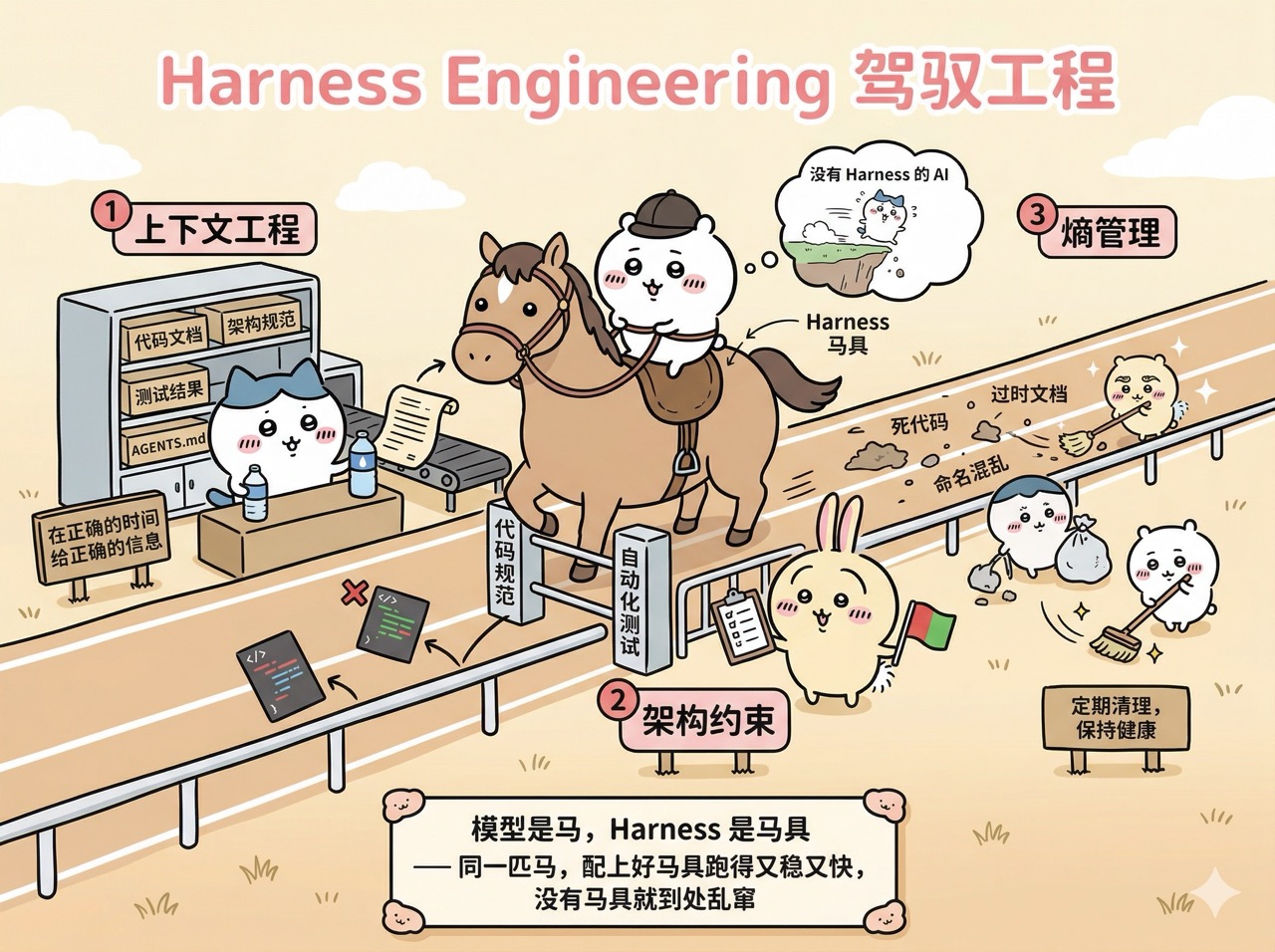
The term “Harness” refers to the equipment used to guide powerful but unpredictable horses, just as Harness Engineering builds a complete “operating environment” around AI programming agents to ensure they work according to your expectations.
Harness Engineering includes three core pillars:
- Context Engineering: Ensuring AI receives the correct information at the right time, including codebase documentation, architectural specifications, AGENTS.md files, test results, etc.
- Architectural Constraints: Enforcing rules that AI must follow through code quality checkers, automated testing, etc. Clear boundaries help AI converge on the correct solution faster.
- Entropy Management: Regularly cleaning up accumulated issues in AI-generated code, such as outdated documentation, naming discrepancies, and dead code.
Why is this concept becoming increasingly important?
Because in the era of AI programming, the model itself is a generic commodity; the real competitiveness lies in the engineering system built around the model. The same large model can produce vastly different code quality in different Harness environments. The role of programmers is shifting from “writing code themselves” to “designing systems that allow AI to write code reliably.”
Suitable Scenarios: Enterprise-level AI development, projects requiring high code quality and stability, long-term projects involving multiple collaborators.
4. Ralph Wiggum Loop
The Ralph Wiggum Loop is a popular AI programming mode in 2026, named after the persistent character Ralph Wiggum from “The Simpsons.”

This mode has several open-source implementations, such as wiggumdev/ralph. Its core idea is simple: put AI in a loop to execute repeatedly until all checklist items in the requirements document are completed.
The workflow is roughly as follows:
- Write a PRD (Product Requirements Document), breaking down the desired features into clear checklist items.
- Let the AI agent start executing, taking unfinished tasks from the checklist each time.
- After completing a task, the AI submits code via Git, recording progress.
- Start a new iteration with a fresh context, continuing to address remaining tasks.
- Repeat until all checklist items are completed.
The cleverness of this mode lies in starting each iteration with a clean context (persisting progress through Git and files), avoiding the issues of AI losing track during long conversations. It can also run unattended; you write the PRD and can go to sleep, checking the results the next day.
However, be sure to set limits on the number of iterations and token budgets to prevent the AI from getting stuck in an infinite loop and burning through resources.
Suitable Scenarios: Projects with clear and decomposable functions, wanting AI to work unattended, large task volumes with relatively independent tasks.
5. BMAD Agile AI Development Method
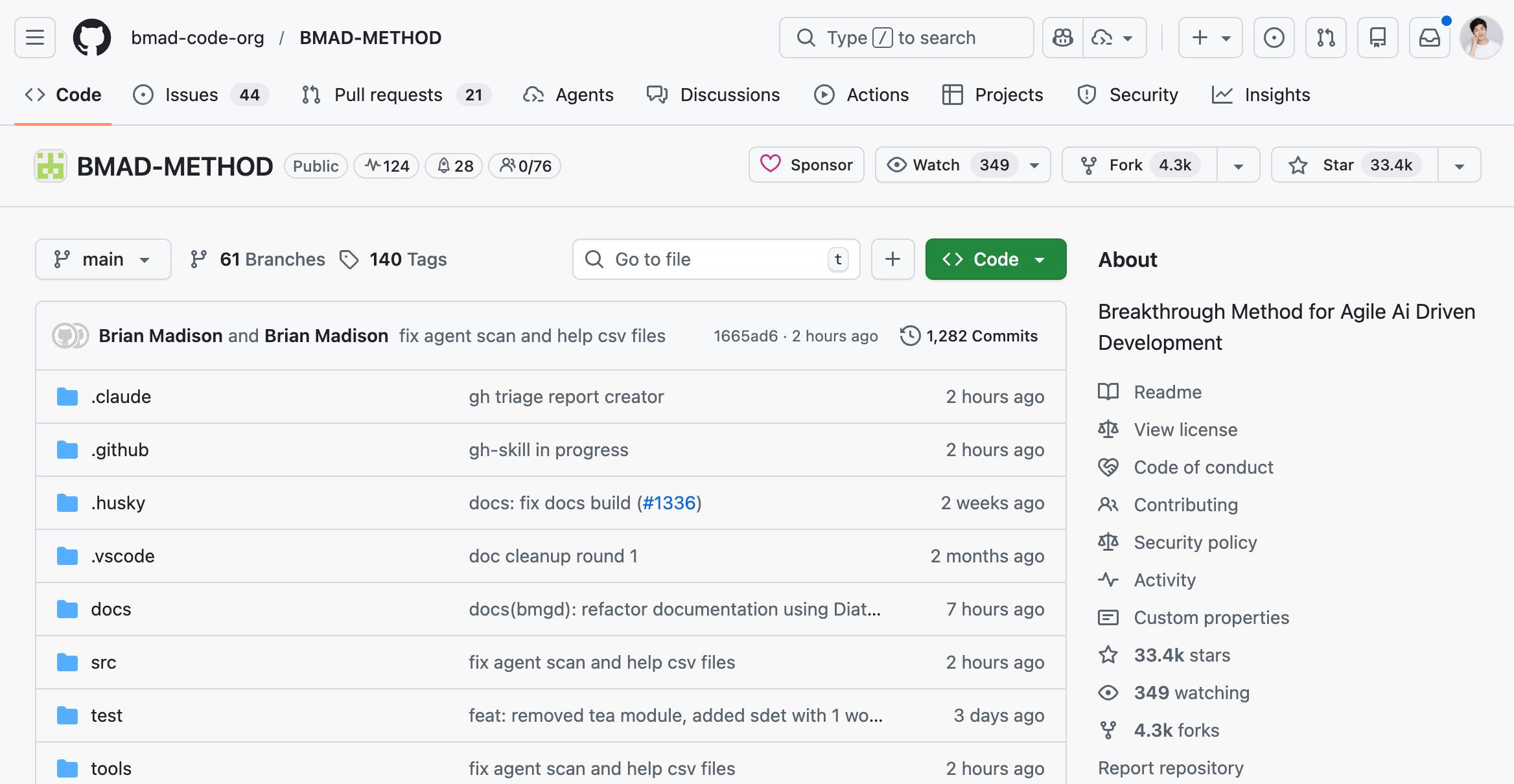
BMAD-METHOD (Breakthrough Method of Agile AI-Driven Development) is a systematic framework for AI agent development aimed at structuring and reusing the previously chaotic AI programming process.
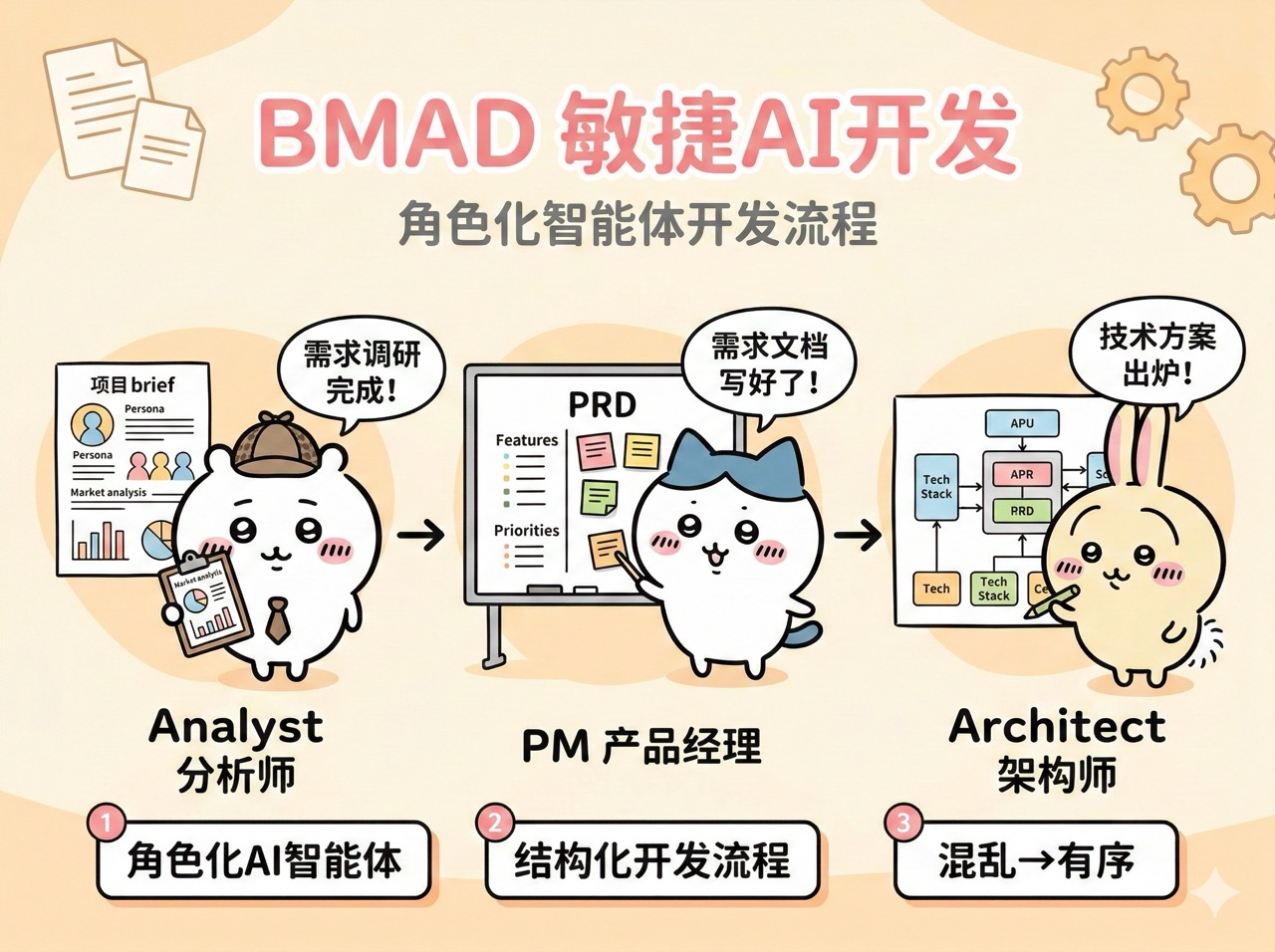
BMAD organizes the development process using role-based agents, where each agent plays a specific role:
- Analyst Agent: Creates project briefs, including market analysis and user profiles.
- PM Agent: Transforms the brief into a detailed Product Requirements Document (PRD).
- Architect Agent: Designs technical implementation plans and system architecture.
BMAD agents are divided into two types:
- Simple Agents: Single-file, self-contained, suitable for focused tasks like code review and documentation generation.
- Expert Agents: Have cross-session persistent memory and dedicated folders for resources, suitable for complex multi-step workflows.
Each agent has standardized components, including personas (roles, identities, communication styles, principles), capability lists, interaction menus, and optional key actions.
BMAD has gained over tens of thousands of stars on GitHub, indicating that this structured AI development method is being recognized by an increasing number of developers.
Suitable Scenarios: Complete projects starting from scratch, products requiring a full analysis-design-development process, teams wanting to standardize AI development workflows.
6. SDD Spec-Driven Development
SDD (Spec-Driven Development) is a new development methodology in the AI era, emphasizing creating clear, AI-understandable, and executable specification documents before coding.
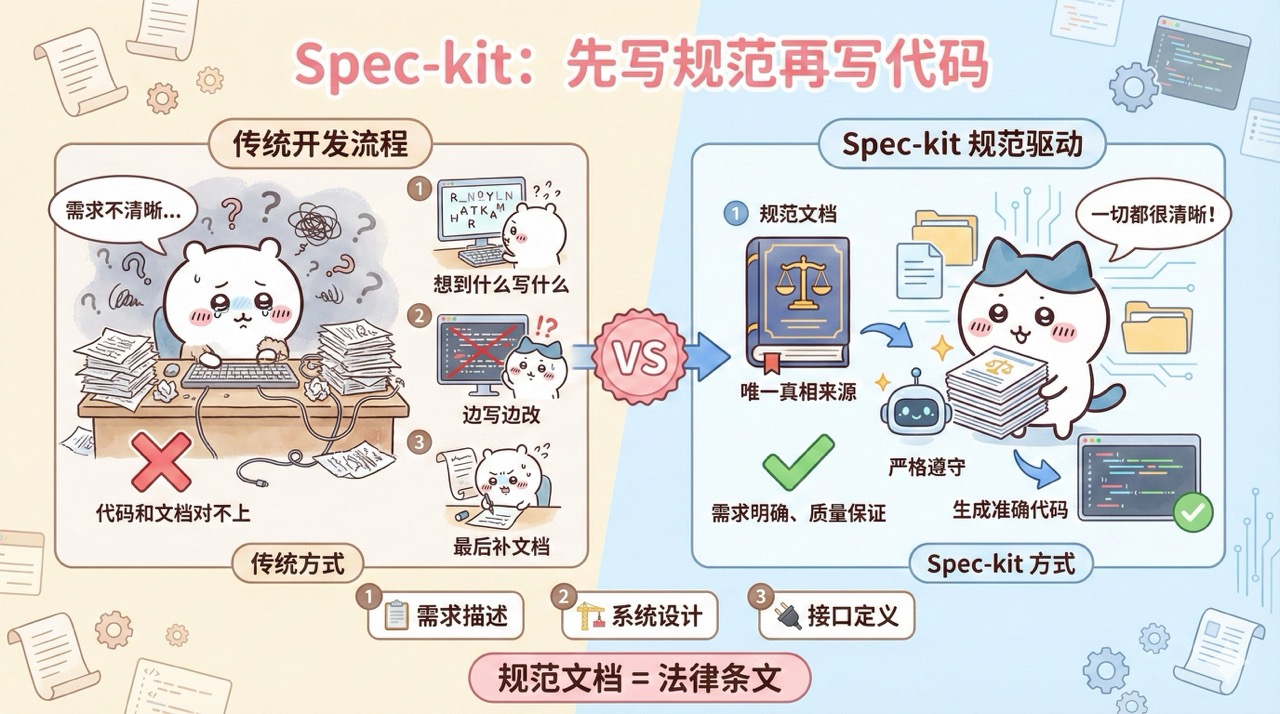
The traditional development process involves writing as ideas come, making changes along the way, and then supplementing documentation at the end. This can lead to unclear requirements and discrepancies between code and documentation.
In contrast, SDD’s approach is to first write requirements as specification documents and treat these documents as the sole source of truth for the code.
You can think of the specification document as the “project constitution,” containing detailed requirement descriptions, system designs, and interface definitions. AI must strictly adhere to these articles to generate code, ensuring the output meets expectations.
Why is SDD gaining more attention?
Because the quality of AI-generated code directly depends on the clarity of the context, not just on prompt engineering. A clear specification document can reduce errors more effectively than any prompt tricks.
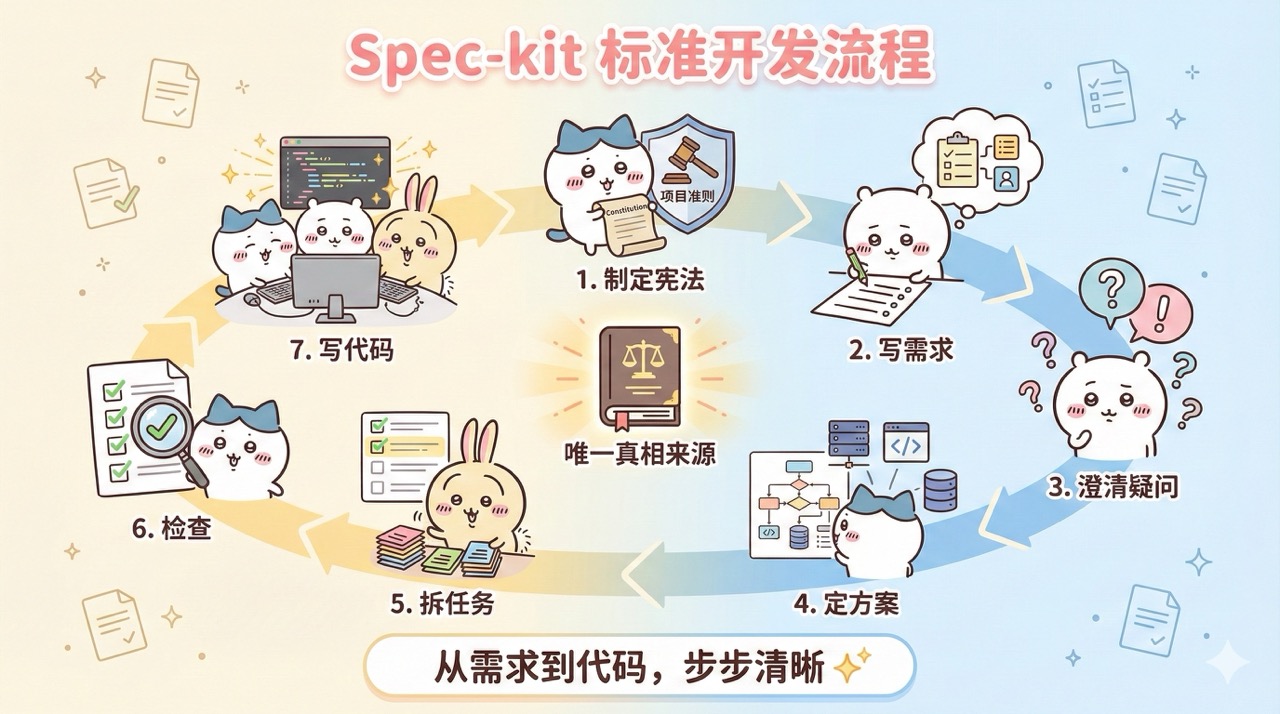
The typical workflow for SDD is as follows:
- Constitution: Define the project’s basic principles, coding standards, and performance criteria.
- Specify: Describe what functions to implement, why, and what user needs are.
- Clarify: Allow AI to ask structured questions to clarify edge cases and error handling.
- Plan: Determine the tech stack, system architecture, data models, and API interfaces.
- Tasks: Break down the plan into executable task lists, marking dependencies and priorities.
- Implement: AI generates code according to the task list, and humans validate it.
This process is very similar to the standard workflow that programmers follow in enterprise project development, except the executor has shifted from humans to AI.
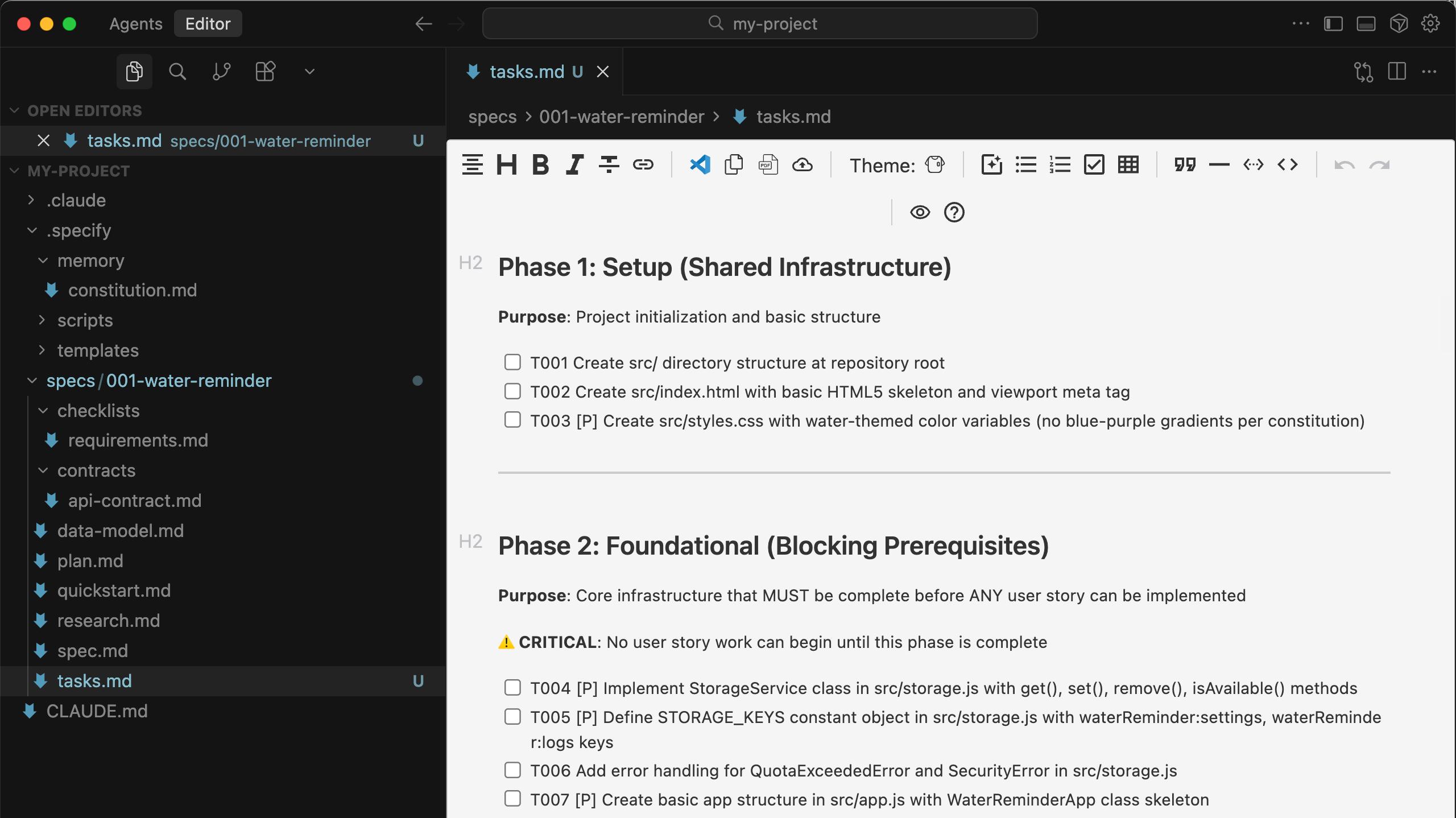
In September 2025, GitHub released the open-source Spec Kit toolkit to help developers practice SDD methodologies in AI programming. It supports mainstream programming tools like Claude Code and GitHub Copilot, guiding you through the above processes with a set of slash commands. Even if you’re not a software development expert, you can easily follow the structured project development process under AI guidance.
Suitable Scenarios: Complex and clear requirement projects, scenarios with high code quality demands, team collaboration in development.
Comparison
After learning these modes, here’s a summary table:
| Mode | One-Sentence Summary | Entry Barrier | Suitable Project Scale |
|---|---|---|---|
| Vibe Coding | Follow intuition, as long as it runs | Lowest | Small projects/prototypes |
| Agentic Engineering | Contractor mode, plan before executing | Medium | Medium to large projects |
| Harness Engineering | Put a harness on AI, build a reliable operating environment | Higher | Enterprise-level projects |
| Ralph Wiggum Loop | Write a checklist for AI to loop until completion | Medium | Medium projects with clear functions |
| BMAD | Role-playing development with analyst + product + architecture | Medium | Complete products from scratch |
| SDD | Write specification documents first, then let AI follow | Medium | Clear requirements, high-quality demands |
Note that these modes are not mutually exclusive; they can be mixed in actual development. For example, you can start with SDD to write specifications, then use BMAD’s role-based agents for execution, while applying Harness Engineering principles to constrain AI behavior. Flexible combinations yield better results.
Conclusion
Returning to the interview scenario, if you only know Vibe Coding, it indicates you are still at the beginner stage of AI programming. However, if you can clearly explain the applicable scenarios and advantages of these six modes, the interviewer will likely view you in a new light.
AI programming is evolving rapidly; the best practices today may be replaced by better alternatives in a few months. Continuous learning and hands-on experimentation are more important than memorizing any single concept.
If you are just starting to learn AI programming, you will definitely begin with Vibe Coding. If you want to systematically learn the complete knowledge system of AI programming and quickly create enterprise-level projects and commercial products, you can check out my free open-source “AI Programming Zero Basics Tutorial,” which has gained over ten thousand stars and covers the entire process from zero to project practice to product monetization.
Open-source repository: https://github.com/liyupi/ai-guide
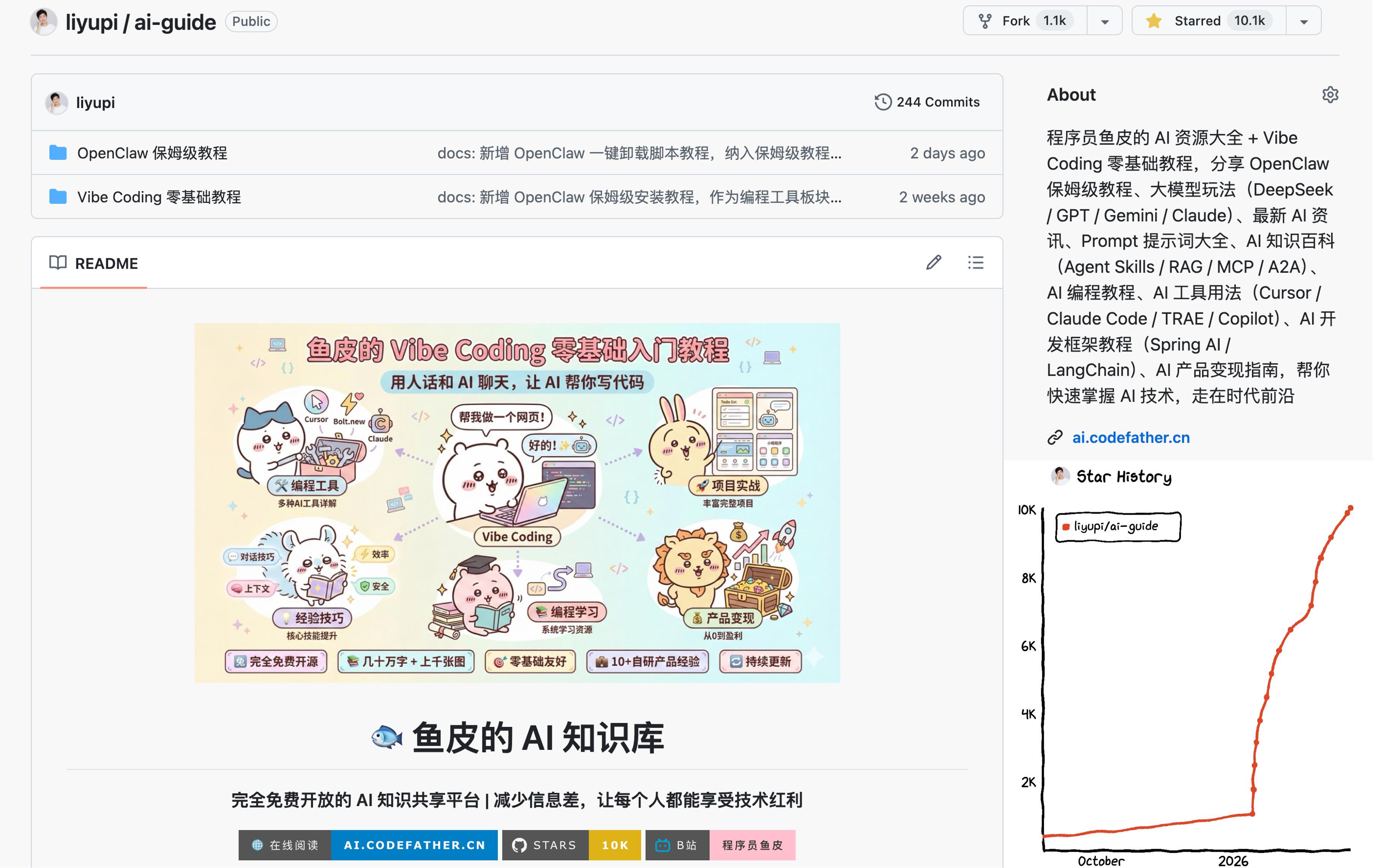
I am Yupi, continuously sharing AI programming insights. If you find this helpful, feel free to like, bookmark, and follow. I also welcome discussions in the comments about the AI programming modes you have tried!
Comments
Discussion is powered by Giscus (GitHub Discussions). Add
repo,repoID,category, andcategoryIDunder[params.comments.giscus]inhugo.tomlusing the values from the Giscus setup tool.